 By Carol Gottlob By Carol Gottlob
August 7, 2014
BURLINGTON, ON.
So the flood waters have subsided, and the issues surface….
The Corporation of the City of Burlington has, since the last election, spent a phenomenal amount of money on two new features of the city; the doomed pier and the Performing Arts Centre. I admit I didn’t pay much attention to the pier, until the crane toppled over and the bills started to pile up. Next, was the Performing Arts Centre, which I questioned, because we are already surrounded by performing arts centres in Oakville, another in Mississauga, Brampton, Guelph and Hamilton. Don’t get me wrong – I endorse art and culture, but this seemed like a bit of overkill to me.
The fact of the matter is, these now exist, and we live with them.
 Is Burlington more than its over priced pier? Now, looking ahead, I feel it is time for “renewal”. It is time to look at what we already have, and where necessary, preserve, rebuild, enhance and protect it. The recent flood highlights exactly that need. Climate change is upon us. Floods, ice storms, hurricanes and tornados will become part of our existence on this planet and in this community. We will not be spared. So, let’s take a closer look at the infrastructure, and try to get ahead of the curve. We need to invest in fortifying our systems that we rely on, namely power, transportation and water. We need to protect the properties we call “home”. And this is where the story gets very real.
When the flood waters rose, I stood at the foot of my street and looked at the water rising on New St. I saw people wading through waist-high water carrying their belongings in green garbage bags. I offered help and saw many people doing likewise. Later, I walked over to my former neighbourhood, just south of New St. As I approached my old street, I could smell grilled meat on the bar-b-q. As I passed houses, I saw people inside eating, laughing and drinking wine. Meanwhile, a few steps further down the street toward Tuck Creek, lights were out, cars were floating, and people stood by looking on silently, exchanging almost whispered comments. It was surreal.
The next morning, I returned to pay a visit to former neighbours and dear friends, whose house was now a soggy shell, pumps gorging water back into the creek. Across the road, I saw an elder couple I’ve observed for years. They bought their house when it was built in the 60s and have kept it tidy and neat for all these years. Now they were standing outside, trying to understand how to put the pieces together again.
This is where we need to invest. In the properties that exist. The farmhouses that herald our rural traditions. The neighbourhoods that developers built, but people developed! The original telephone poles that adorn my street were installed in the 1950’s, when two wires were suspended – one for electricity, one for telephone. Now I look out, and I see 26 cables dangling from the equivalent of a toothpick! We need to fortify. We need to protect what we have. We need to help those who turned the houses into homes.
This recent event could aptly be called an emergency situation. Thankfully, no one was harmed, but the damage is severe and the long term impact is undeniable. And let us not be fooled; there will be more to contend with. It is imperative that the city and the council operate with a view to the near future and build reserves, provide contingencies and look after the needs of its citizens when disaster strikes.
Carol Gottlob is a candidate for the ward 4 council seat.

 By Staff By Staff
August 6, 2014
BURLINGTON, ON
The Region has put in an “enhanced curbside waste collection” services for the areas of Burlington hardest hit by starting Thursday, August 7, 2014.
 On their regularly scheduled collection day, residents in Burlington Collection Areas one through eight (1-8) will not be limited to the usual three-bag limit. The restrictions for bulk waste have also been lifted to help with clean-up efforts. On their regularly scheduled collection day, residents in Burlington Collection Areas one through eight (1-8) will not be limited to the usual three-bag limit. The restrictions for bulk waste have also been lifted to help with clean-up efforts.
“We are committed to working with the City of Burlington to assist residents after Monday’s storm,” said Gary Carr, Regional Chair. “Waste collection is an important Regional service and we will continue to monitor how we can further respond as clean-up efforts continue over the coming weeks.”
In order to assist with the clean-up, residents are asked to observe the following Regional waste collection guidelines:
Bags/containers of garbage are not to exceed 23 kilograms (50 pounds).
Flooring, including carpet, is to be bundled in maximum two-by-four foot lengths.
Insulation should be placed in a standard garbage bag only.
Any plastic sheeting and loose drywall debris should be placed in a standard garbage bag/container.
Waste material is to be placed curbside no sooner than 5:00 p.m. the day before the scheduled collection day.
Note: acceptable bulk waste collection materials remain the same during the enhanced waste collection period, and these do not include building and construction materials such as drywall and wood panelling.
 By Pepper Parr By Pepper Parr
August 6, 2014
BURLINGTON, ON
We get mail, ok email. The mail bag yesterday had a piece from Mr. Vince Rossi, president of the Burlington Air Park Inc., with the words in the subject line “For your publication” . Mr. Rossi is the person suing the Gazette, me personally, Vanessa Warren and Monte Dennis for a total of $100,000 to be awarded to him as exemplary damages. He wants us to be ordered to give him money, so that we are set out as examples of what people cannot do.
That matter has yet to get in front of a judge.
In his article to us – which we have set out below in full – with comments in a different typeface and we identify the Rossi comments. Our objective is to show the full picture with all the detail.
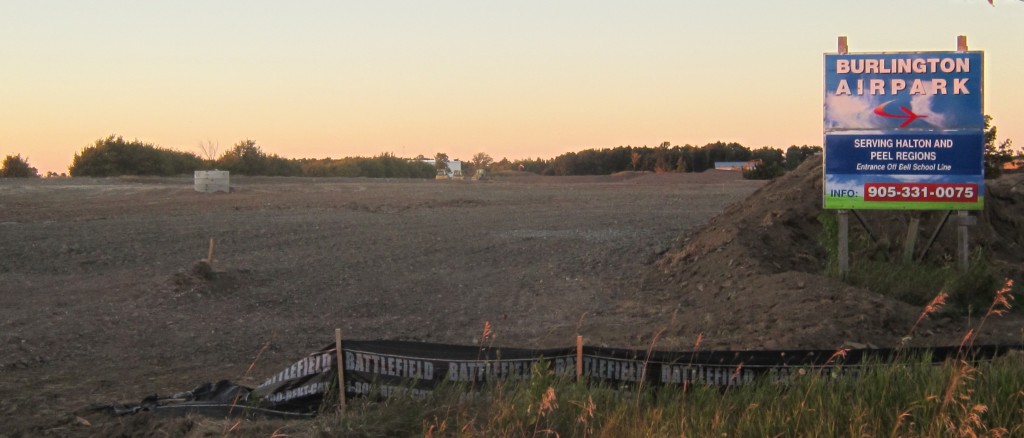 Getting the Air Park to the point where it has a strong sustainable business case has been an uphill battle for Vince Rossi – he’s not there yet. ROSSI The Ontario Ministry of the Environment and Climate Change recently completed a review of groundwater monitoring and an environmental site assessment by Pinchin Environmental completed in April, 2014. In a letter to the Airpark dated August 1, 2014, the District Supervisor of the Halton Peel District Office writes:
“Based on our analysis of the information provided in this report, the [Ministry] has found that there is no indication the fill operations are adversely impacting groundwater offsite at this time.”
The key words here are “at this time”. It takes a lot of time for anything to work its way into a water table and the MECC makes that clear. This is in no way a clean bill of health.
ROSSI The Airpark further understands that Halton Region’s Medical Officer of Health has concluded, based on the Ministry’s review and private well sampling conducted by Health Department officials, that there is no health risk to residents from the Airpark’s activities.
 Vanessa Warren has been the best voice for those who want much more transparency on what is taking place at the air park. She formed a community coalition, Rural Burlington Greenbelt Coalition and then decided that she would run for the council seat for the ward the air park is located in. Warren and six other candidates want to take the seat from Councillor Blair Lancaster Halton Region has not produced any reports related to the safety of the fill that has been placed on the Burlington Airpark property.
In August 2013, the Health Department and the Ministry of Environment and Climate Change (MOECC) (formally the Ministry of Environment) worked together to sample and analyze the drinking water wells of homes located immediately adjacent to the areas of the Burlington Airpark where fill was placed. The results were provided to the individual private well owners. The purpose of the private well testing was to determine the safety of the well water at the time of sampling based on the parameters tested. The results were not intended to provide any conclusive evidence of any impacts from the filling operation at the airpark. The Region has not completed any other testing, nor produced any reports or studies related to the fill operations at Burlington Airpark.
Dr. Hamidah Meghani, Medical Officer of Health and Commissioner, Region of Halton
ROSSI The Airpark will conduct further groundwater testing in the future and will be sharing the results with the Ministry.
An informed reader who asked not to be identified had these comments:
The majority of the sample wells are for testing groundwater that has reached the perimeters of the airpark. The only interior well that I am aware of, is in a location with very little fill deposited.
There does not appear to be any documentation from the MOE that indicates that Terrapex was erroneous in their 2013 identification of contaminants in the scant soil samples that Rossi provided.
Furthermore, since there was no indication as to where these identified contaminants lie within the airpark’s extensively filled sites, it is reasonable to understand and believe that while there is no health risk now, it is just a matter of time before these contaminants will leech into neighborhood wells and bodies of water.
Those who have kept up with this file, several on city council want a comprehensive, core test drilling for contaminants, grid by grid on all areas that Rossi accepted ungoverned and unregulated fill.
We are told by a source in the trucking industry that at least one of the companies that delivered landfill to the site says that all the soil the one company delivered was tested. Aecon, Millennium Dumping, and King Paving delivered landfill to the site. Where are all these soil samples – and why have they not been turned over to the City?
Yes they will be conducting further tests – because Mr. Rossi knows that without data that can prove there is no contamination – there will be little co-operation from anyone he hopes to do business with at city hall. Testing has to be done over a lengthy period of time.
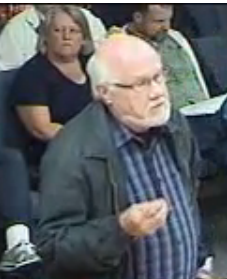 Dennis Monte, one of three people being sued for libel has delegated frequently on the air park. While a compassionate focused speaker – one wonders if this council is listening to him. Please find attached a copy of the Ministry of the Environment and Climate Change (MOECC), Technical Support Section review of the following document: “Groundwater Monitoring Program and Limited Phase II Environmental Site Assessment” dated April 7, 2014, prepared by Pinchin Environmental Ltd. and signed by Melissa Gallagher, Sarah Ferguson and Andy D. Vanin.
For reference, this report can be viewed at the Burlington Airpark website www.burlingtonai rpark.com.
In summary, the Environmental Site Assessment and groundwater monitoring program found that groundwater down gradient of the fill area meets the provincial standards, except for uranium.
Based on additional re-sampling that was done, the report concludes that the uranium levels are likely naturally-occurring. A one-time cobalt exceedance was reported in one well, however additional core sampling was_done and the exceedences were not found.
Based on our analysis of the information provided in this report, the MOECC has found that there is no indication the fill operations are adversely impacting groundwater off site at this time.
Going forward, the MOECC is recommending that Burlington Airpark submit an ongoing groundwater monitoring plan for our review. The purpose of this groundwater monitoring program would be to monitor groundwater quality over time.
ROSSI In another development, Airpark owner Vince Rossi announced that he will not pursue a further legal appeal against the City of Burlington on the question of jurisdiction to apply its site alteration bylaw on land used for an airport.
Mr. Rossi has until September 10th to seek leave to appeal the Appeal Court decisionIf he doesn’t seek leave that ends things legally. While Rossi has said he will not seek leave the city is going to sit tight until the ability to appeal is lost.
ROSSI “While I do not agree with the decision given by the Ontario Court of Appeal in June, I accept the Court’s judgment and intend to comply with it. Equally important is my desire to move forward and in a mutually respectful and beneficial way with the Airpark’s neighbours, the City of Burlington and all other interested parties,” Rossi said.
The residents of the east side of rural Burlington scoff at the words “mutually respectful and beneficial way “
ROSSI “The Airpark is an important community asset, providing landing space for emergency medical flights and search- and-rescue aircraft, while also serving as a key economic driver for Burlington and Halton Region. It is my hope that with the litigation behind us, and the results of the groundwater testing re-confirmed, the City, Region and the Airpark can concentrate on enhancing the contributions the Airpark can make to the community and explore opportunities to attract more businesses and employment to our community. ”
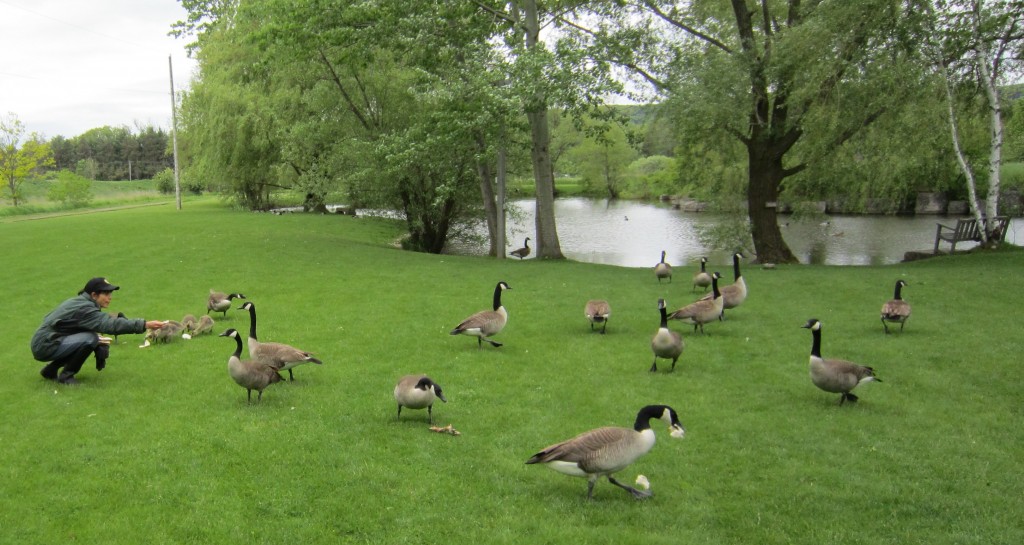 Part of the Sheldon property on Appleby Line. That rise of land in the background is fill Vince Rossi dumped without a site plan. There is a pile of landfill on the other side of the property as well. Sheldon basically lives in a valley with 30 foot hills on either side. The value of her property has been reduced by as much as 60% Justice Murray took the wind out of that sail with his decision which was agreed upon at the appeal level.
 We have a small piece of advice for Mr Rossi. Make an appointment with Frank McKeown, Executive Director of the Burlington Economic Development Corporation. His job is to grow the commercial and industrial side of the tax base for the city. He also wants institutional but unless you want to put a jail on the property there is nothing there for you. We have a small piece of advice for Mr Rossi. Make an appointment with Frank McKeown, Executive Director of the Burlington Economic Development Corporation. His job is to grow the commercial and industrial side of the tax base for the city. He also wants institutional but unless you want to put a jail on the property there is nothing there for you.
McKeown is a tough cookie; he was Chief of Staff to the Mayor for two years and is one of those serial entrepreneurs that goes from one success to another. He can read a balance sheet better than most people you are going to meet – profit and loss statements get the full Monty treatment from McKeown. Pass the smell test with McKeown and you just might improve the Rossi reputation
Most of the people in rural Burlington like the airport – they kind of like that light fluttering sound when aircraft are landing. What they don’t like is what you have done to several properties. And they don’t like the spin you put on almost everything.
Can a leopard change its spots? Probably not – can Vince Rossi change? That’s an open question in the minds of the vast majority of your neighbours.
The decent thing for you to do is buy the Sheldon property and get permission to fill the space between your two 30 foot piles of fill with landfill that meets all the testing requirements. Then use the proceeds of that landfill to pay Sheldon.
Finally Mr. Rossi – keep sending us your thoughts – we really want to see you succeed – just not at the expense of others.
 By Pepper Parr By Pepper Parr
August 4, 2014
BURLINGTON, ON
The Burlington Waterfront Committee (BWC) is patiently waiting for the report on the investigations being done by Amberley Gavel Ltd., the company given the task of looking into a complaint the BWC had about how Council handled the sale of property at the edge of Lake Ontario between Market and St. Paul Street.
Reports issued are delivered to the city which is the client – they are made public when that Council decides to make them public. Apparently the BWC people won’t see the report until it is released by Council.
Council decided on October 15th , 2013 to sell the property; a decision which the BWC, along with hundreds of citizens, opposed. What the BWC is really concerned about is the process used. The public does not know why this is being done. To suggest that it is because the area does not need any additional parkland is specious.
The Council decision included the following directions:
Direct the City Solicitor and Manager of Realty Services to work with the Ministry of Natural Resources (MNR) and enter into an agreement for the sale of MNR and city lots between St. Paul Street and Market Street to the adjacent land owners within the next six months; and
Direct the City Solicitor and Manager of Realty Services to report back to Community Services Committee if a sale agreement for city lots between St. Paul Street and Market Street has not been reached within the six month period .
In April 2014 the BWC wondered what the problem was – there were no reports coming to Council and the six months had passed. In late May, a report went to a Standing Committee asking for an extension on the time frame to come up with an agreement – an open ended extension at that.
Gary Scobie, a co-chair of the Burlington Waterfront Committee, delegated at the Community Services Committee on Tuesday May 27th, 2014. In his delegation Scobie asked “why the delay” and also wanted to know why the market value assessments had not yet been completed. He also asked: “What’s going on here?”
If there is no agreement on price Scobie thought the process should go back to square one. He was also upset with two other staff directions in the October 2013 decision.
The public was going to have input on the design of the “windows on the lake” at each end of the properties but no input other than what they got at the committee meetings in 2013 on what could be done with the land that council decided to offer for sale. The city had done a very poor job – they failed miserably to fully inform the citizens. Then General manager, Kim Phillips said “the city failed to live up to its normal high standard”. The self serving comment surprised many.
Public input on a matter that is central to how the city sees itself and a policy that is in place to protect the waterfront suggest perhaps that city council might want to take a second look at what they decided to do.
The decision to sell the property was one matter; the reasons for selling the property is another matter, which BWC believes the public has not been told.
City Council went into closed session when it made the decision to sell and then announced their decision but made no comment on the reasons why they made their decision.
The BWC understands that when it comes to discussions around the value of a piece of land and what it can be sold for – council has to go into closed session. “We`ve no problem with that”, said Deedee Davies, Co- chair of the Burlington Waterfront Committee. “What we are not OK with”, he added “is that the reasons for selling the property were apparently also discussed in closed session. We want to know what those reasons were.”
During the debate at Council in 2013, the biggest concern was that the city had too many parks in the area already and that more public space wasn’t necessary. The BWC doesn’t see the lakefront lands as a park – they see it as part of the city`s heritage and unless there is a really compelling reason for selling the land – which BWC says they haven’t heard yet – they want the land kept in public hands.
Scobie didn’t get a chance to ask those questions at the committee meeting. He was told that he would be held to a very strict limits on what he could ask – and that all he could talk about was the content of the report that was before the committee – and that had to do with why the delay was necessary. He could not talk about the reasons council had for deciding to sell the property in the first place.
A staff report presented to the Standing Committee said: “MNR staff has recently indicated to the owners that they are prepared to dispose of the filled Crown lands subject to the Ministry policies and procedures which includes the following key provisions:
The land must be sold at market value.
The City owned Water Street land must be transferred to the three landowners first before the MNR lands can be transferred.
The staff report went on to say that: “The respective policies require a fully documented appraisal process to determine the market value, and that both the City and the MNR are using the same valuation method and terms of reference.
All this was too much for the BWC – they decided to take their concern to the Ontario Ombudsman where they were told Burlington problems don’t get handled by that office – they are managed by an organization called Local Advisory Services.
To get the LAS to investigate one has to make an application to the Clerk and send along a fee of $100. The city waived the fee in this instance. Basically what one is doing is getting the city to agree to hire an investigator to investigate something a citizen feels the city has done that was not right.
Scobie says these “investigations are usually done fairly quickly, so we’re hoping for something in August. What we get is rather an unknown to us. Could it be a finding that the decision should not have been in closed session and therefore Council is advised (ordered?) to share the documentation that led to the decision? Could it invalidate the decision, because it was handled wrong? I don’t think we’ll know until it reaches us. We’re new at this.”
“Could it be an election issue? By all means it could”, said Scobie.
The Burlington Waterfront Committee came into being when the city shut down the Waterfront Access, Protection Advisory Committee (WAPA). Council came to the conclusion that basically nothing was being done. Ward 2 Councillor Marianne Meed Ward pulled together as many people from WAPA and formed BWC. She stick handled the group into an organization that was able to get things done and then she withdrew. She sits on the BWC but does not have a vote. She says she is there to guide and advise.
The BWC gets no funding from the city, but it does use city space for meetings – as do a number of other public groups. When the Waterfront Access and Protection Advisory committee was shut down both Meed Ward and Mayor Goldring said they would form committees to give the public a place to oversee waterfront developments. Meed Ward got there first and nothing was ever heard of what the Mayor had in mind.
The issues related to the land that the city wanted to sell include a number of court decisions that are cloudy at best. One property owner put up his land for sale; it was purchased. The buyer understood that the water lots were a part of the property, but the seller didn’t own the water lots. The seller undertook to obtain the lots, but the neither the city or the province was prepared to sell them. That case took place some 20 years ago, but it seems to hover over the current situation.
In a decision issued by Justice Borkovitch in 1993 he wrote: “On February 16, 1989, the defendants conveyed to the plaintiffs the building lot and undertook to obtain clear title to the water lots as soon as possible after closing. The defendants were unable to complete the purchase of the water lots and as a result are unable to convey them to the plaintiffs and therefore are in breach of the written agreement of purchase and sale. As well, subsequent to this closing, but prior to having heard that the City of Burlington definitely would not sell its portion of the water lots, the plaintiffs constructed a sea wall on the edge of Lake Ontario.”
There is apparently something in a court decision somewhere that allowed a fence on the property to run across the strip of land at the water’s edge, which is owned by the city and the province. That fence on the east side prevents a person from getting to the public land.
A real estate appraiser, who wants to remain unidentified, maintains he knows the “full story” which he promises to tell us, when the city actually sells the property – which he thinks they will do.
There is one amazing number in all this and that is that the property – including the water lots was sold for $545,000. The water lots were deemed to represent 35% of the sale. The deal eventually settled at $354,250 – you can’t buy a house anywhere in Burlington for that – and this was prime waterfront property.
The Burlington Waterfront Committee now waits for the report from Amberley Gavel Ltd, who work for the Local Authority Services, (LAS), which describes itself as a “preferred provider of competitively-priced and sustainable co-operative business services for Ontario municipalities and the broader public sector.” LAS is a wholly owned subsidiary of the Association of Municipalities (AMO). Burlington is a member of AMO. There are some that see a conflict of interest here and wonder if a draft of the investigators report will be given to the city for comment before it is released.
There isn’t all that much of a comfort level within BWC over the relationship with the parties on the other side. Making it an election issue might be the best course for those working hard, on their own dime, to save that waterfront land for the rest of us and our descendants.
This one isn’t over yet. Comments on the web site are pretty consistent.
Related news stories:
Public committee doesn’t like the decision made by Council on waterfront property.
By Pepper Parr
August 6, 2014
BURLINGTON, ON.
The Halton Region 311 service recorded more than 2200 telephone calls from regional residents; in Burlington there were at least 500 homes with varying degrees of water damage.
The Gazette newsroom had inches of water with two streams, albeit small ones coming in from both the back and the front. The proof-reader and the publisher were at one point in water up to their knees, bailing water out of a stair well outside the house that was threatening to add a foot of water to the lower level.
The city got more than two month’s worth of rain in three hours, which brought traffic on the QEW to a halt for periods of time and many of the east west roads impassable.
Other than clearing water on the streets, there wasn’t much more the city could do for residents, who were scrambling to get things out of the lower level of their homes. Initial reports indicate the southwest Ontario city received about 125 millimeters of rain, prompting 2,200 calls to the Region’s 311 service number.
Regional staff were pretty good at taking down basic information. The Region does have a support program for specific types of damage – unfortunately the people taking the calls didn’t have that information at hand.
A request to talk to someone, who could explain what was available and what the processes were to get help with the cost of repairing property, was one the Region could not meet. They advised the Gazette that the Regional web site would be updated.
The flooding moved a significant amount of earth that was covering a gas line that then sprung a leak. The fire department and the gas company were on hand to contain that crisis. The city set up a shelter at the Senior’s Centre and the Mainway area for those who needed a dry place to stay.
Goldring said the north area of the city, near Guelph Line north of Dundas Street is among the worst hit area in the city and many of the roads suffered significant damage.
The city kept up a steady flow of information with the Mayor getting to the airwaves with information – he did a much better job this time than he did with the Via Rail derailment a couple of years ago.
For those with serious water damage Tuesday was a day to be on the phone to the insurance companies and getting through to reclamation companies before all their available manpower was spoken for.
We don’t know how the Mayor did, but the Gazette managed to get a crew in by 4:00 pm – they stayed until well past midnight to take out all the carpeting and cut out two feet of drywall. The water was coming into the building from both the front and the back and the drain pipes were not able to handle the flow.
An interesting point. The city has a program, overseen by the Heritage Advisory Committee, that approves grants to owners of property that has historical significance. Those grants are for as much as several thousand dollars. Those people who suffered serious water damage may not live in historically significant dwellings – but they could use some financial support. One of our neighbours, a pastor at a church that does not have its own building, lost much of the paper work and supplies for his congregation.
The Region has two support programs:
Sewer Back-up Flooding Grant (i.e., Ex-Gratia Grant Program)
If your basement floods due to a sanitary sewer back-up, Halton Region may provide financial assistance in the amount of $1,000. This grant can help home owners to either offset the cost of a deductible on their personal home insurance or help with flood-related clean-up costs.
The Region also offers a one-time Basement Flooding Prevention Subsidy Program. Residents can receive a maximum of $2,725.00. Some of the detail on the Region’s web site:
This table lists a breakdown of the maximum allowances for certain drainage system materials and work, under Halton Region’s Basement Flooding Prevention Subsidy Program.
Weeping Tile Disconnection / Sump Pump System
- Disconnection of the weeping tiles/foundation drains from the sanitary sewer system.
- Purchase & installation of a sump pump system; to receive storm water from the weeping tiles and to direct water to suitable location away from home.
- Covers costs for materials, labour, permit & taxes.
- Disconnection of Downspouts
- Costs associated with redirecting downspouts away from home and to cap the existing pipe leading to the weeping tiles at the side of the home.
- Subsidy is for ½ of all costs up to a maximum of $250.00*Backwater Valve
- Purchase & installation of suitably sized Mainline Fullport Backwater Valve (with clear cover); to prevent sewage flows from backing up into the basement.
- Covers costs for materials, labour, permit & taxes.
- Subsidy is for ½ of the invoiced total by contractor up to a maximum of $675.00. * Homeowners will only quality for this subsidy if they have demonstrated they do not have any downspout or weeping tile/foundation drain connections to the sanitary sewer or coinciding with measures to eliminate these connections.The Application Process: How do I apply?
- Contact the Basement Flood Prevention Subsidy Program Coordinator at 905-825-6000 ext. 7918 and arrange a time for a Regional Representative to conduct a Household Drainage Survey (HHDS) at your home.
- During the survey, the Regional Representative will assess the general installation and characteristics of your home, advise what work would be eligible for subsidy funding and obtain proof of past flooding (contractor invoices, insurance statements etc.). The work eligible for subsidy will be summarized and left with the homeowner for the Contractor’s use to help itemize the costs. A video inspection of the sanitary sewer lateral may be conducted.
This kind of situation is probably the first time many Burlington residents have had to deal with the Region. Most people don’t realize that close to half of the annual salary each city council member gets comes from the Region, where they serve as regional Councillors.
During the Christmas power outage due to snow and freezing rain the city was the contact point and for those really hard hit in rural Burlington the city had set up a command post in Kilbride.
Water damage is a Regional responsibility – which means dealing with an organization that is a bit removed from the average citizen. This was one of the few occasions when the Regional Chair, Gary Carr, did not have comforting words for the citizens.
There was some sunshine on Tuesday; for those who suffered no damage the world will continue to revolve. For those who did experience flooding – they now enter into that phase called “fighting with the insurance company”. When the Gazette met with the reclamation company – there was no opportunity to negotiate a price. It was fixed, firm and you had better take it now before all the crews were sent elsewhere. We gulped and signed the agreement.
Once the water is out of the lower level and it is close to dry, we then get to find a contractor to replace the dry wall and decide what colour we want the space to be.
A final comment – the neighbours were great.
 By Pepper Parr By Pepper Parr
August 5, 2014.
BURLINGTON, ON.
The office of the Clerk at city hall, the person responsible for overseeing the municipal election has at least one candidate pretty ticked off.
James Curran, a candidate in ward 6 (one of seven people running for the Blair Lancaster seat) began setting out his election signs. Within hours he got a call from the bylaw enforcement officer telling him his signs had to come down.
 A call from the bylaw enforcement officer doesn’t happen unless someone registers a complaint. Curran is pretty sure he knows who it was – “but that is her right” was his comment. A call from the bylaw enforcement officer doesn’t happen unless someone registers a complaint. Curran is pretty sure he knows who it was – “but that is her right” was his comment.
Tracey Burrows, Manager of By-Law Enforcement and Licensing for the City of Burlington advised Curran that by-law (34-2007) says signs could not be erected anywhere until “six (6) weeks immediately preceding the day of a municipal election”.
Bylaw 34-2007 was passed in 2007 – and it is mentioned in the Manual every candidate is given. But that’s all the manual does – mentions the bylaw – doesn’t give any of the content. Curran thinks the Candidate Manual is poorly written.
Near the end of what is at least a 15 page document there is mention of election sign rules:
Election signs located on private property. No candidate, agent or any other person shall affix, erect or otherwise display an election sign or permit or cause an election sign to be erected, affixed, or otherwise displayed prior to the issuance of writs for a provincial or federal election or six (6) weeks immediately preceding the day of a municipal election.
It was almost as if the people who wrote the manual wanted to hide the information.
 “It is my view: said Curran “that such a by-law is beyond the jurisdiction of any municipality and was passed to assist incumbents with their plans to get re-elected. I would note that Burlington has had a high propensity to re-elect incumbents. “It is my view: said Curran “that such a by-law is beyond the jurisdiction of any municipality and was passed to assist incumbents with their plans to get re-elected. I would note that Burlington has had a high propensity to re-elect incumbents.
In a letter addressed the City Manager, Curran says: “… you well know that the City already provides free media coverage for incumbents through their various publications particularly “City Wide Magazine” and the Burlington Post’s City Update that features the various incumbent councillors. Over the course of a four year term, incumbents will have the benefit of taxpayer funded publications which provide them with a great deal of public recognition.”
Curran adds: “Restriction of political signage clearly works to the disadvantage of challengers such as myself. It is inherently unfair. More importantly, it is at variance with the Charter of Rights and Freedom. For greater certainty, my lawyer conducted research for me to verify my views.”
Curran sent along a copy of an Ontario Superior decision dated Nov 1st, 2007 in the matter of Shurman v Vaughan. In said decision Justice J. Sosna held clearly that such restrictions by municipalities are at variance with the law. Simply put, no municipality can interfere with the “Freedom of Expression” by a citizen.
“It is not my intention to go to Court to resolve this matter” said Curran but he did want the City Manager to provide a public notice that the subject by-law will not be enforced for the duration of the 2014 election campaign pending a legal review confirming the legality of the by-law. This would avoid the need for injunctions or court applications. In the name of fairness, I would suggest that such an announcement be made as soon as possible to enable other candidates to obtain profile, while at the same time permitting citizens the right to exercise their democratic right for Freedom of Expression.
Curran copied almost everybody with any clout and an email address at City Hall. Does he have a point? How long should election signs be up – would we want signs up in January when people can nominate?
 By Staff August 4, 2014 BURLINGTON, ON. In 2012, BurlingtonGreen brought Dr. Jane Goodall to Burlington for two sold out audiences with multiple standing ovations at each event. The “greens” are bringing Rob Stewart to Burlington in October when he will screen his latest film Revolution! By Staff August 4, 2014 BURLINGTON, ON. In 2012, BurlingtonGreen brought Dr. Jane Goodall to Burlington for two sold out audiences with multiple standing ovations at each event. The “greens” are bringing Rob Stewart to Burlington in October when he will screen his latest film Revolution!
 Sharkwater won numerous awards. Stewart was born in 1979, in Toronto, where he was raised. He began doing underwater photography as a teenager, and became a scuba-diving trainer when he was eighteen years old. He attended the prestigious Crescent School as a youth. For four years, Stewart worked as chief photographer for the Canadian Wildlife Federation’s magazines, and also worked as a freelance journalist. He won awards for his journalism. Stewart holds a Bachelor’s degree in biology from The University of Western Ontario. Stewart got the idea to make the movie Sharkwater at age twenty-two, when he found out there was illegal long-lining in the marine reserve, while he was photographing sharks in the Galapagos Islands. The public did not respond when he tried to put out a message that lining was killing the sharks and many other species were going extinct.He traveled through fifteen countries for the next four years, studying and filming sharks.
 It was while filming Sharkwater that Stewart began to see the much bigger picture – the earth’s environment was really at risk. During the filming of Sharkwater, Stewart realized that the problem with the environment went far beyond sharks – the world’s environment was at risk.
 Rob Stewart, award winning film maker will be at the Performing Arts Centre in Otcober. In October Stewart will present “Experience A Revolution” and screen his latest film “Revolution”. In addition to viewing the Revolution documentary, audiences will have the opportunity to participate in an interactive Q & A with keynote Rob Stewart. https://www.youtube.com/watch?v=UxcophNGLdg This ground-breaking documentary has received both critical and audience acclaim and has won a number of awards at film festivals around the world. David Suzuki says: “If you go to one movie this year it must be Revolution”. “A Stunning Adventure” according to Sir Richard Branson. The dual component event will be held at the Burlington Performing Arts Centre and will include the Imprints Youth Environmental Summit, inviting Halton youth from grades 7 through 12. The Eco Awards Celebration will be held at the same time. A large part of the BurlingtonGreen mandate is to educate; both events are part of a program to empower audiences to take action individually and collectively to help the planet locally. Tickets will go on sale at the BPAC in mid-August: $25/per person with proceeds to support the important work of BurlingtonGreen. Don’t miss Rob Stewart at the BPAC on October 21st!
By Pepper Parr
August 4, 2014
BURLINGTON, ON.
A bit of a new look to your “newspaper on a web site” which we think is cleaner and brighter looking.
Along with the new look there are some additional features. There is an archive in place and the search tool is clearer. With the archive – you can type in February 2013 and see everything we did that month.
To the delight of our thousands of readers there is also a proof reader on staff – finally. It will take us a year to overcome the reputation we earned for the poor spelling.
 Our intention was to bring all the little features that made reading your newspaper and making a copy of a story that much easier. We think we got them all – but if we missed anything – you know where we live. Our intention was to bring all the little features that made reading your newspaper and making a copy of a story that much easier. We think we got them all – but if we missed anything – you know where we live.
There are now two house ads on the home page – that feature will expand.
There is a community activity feature that is under development – that should be ready for mid-September.
Progress.
 By Staff By Staff
August 3, 2014
BURLINGTON, ON.
Two trailers loaded with athletic gear and parked in a driveway at 3335 North Service Road were “removed” sometime in the late night between July 30th and July 31st.
 Unmarked 53 foot trailers parked in a driveway on the North Service Road got taken away by thieves. The value of the contents was $430,000 of Adidas athletic shoes and apparel.
This had to be an inside job – somebody told somebody.
Detective Vince Couce of the 3 District Criminal Investigations Bureau at 905-825-4747 ext. 2307 or by e-mail to vince.couce@haltonpolice.ca has this file.
Does The HRPS have access to the film feed from the camera that dot the QEW? Trucks that size have to move along highways – but this was a planned job – and that merchandise is far from Burlington by now.
 Oddly enough, the detective investigators usually catch the culprits; they are very good at their jobs – we will watch for details on this one: $430,000 worth of equipment, that’s a lot of money. Oddly enough, the detective investigators usually catch the culprits; they are very good at their jobs – we will watch for details on this one: $430,000 worth of equipment, that’s a lot of money.
If Crime Stoppers is your preferred way of talking to the police you can reach them at 1 800 222 8477 (TIPS) or through the web at www.haltoncrimestoppers.com or by texting “Tip201” with your message to 274637 (crimes).
By Pepper Parr
July 30, 2014
BURLINGTON, ON.
As part of their efforts to keep Burlington one of the best places to live in Canada, the city is making major changes to the way it plans for, delivers and monitors the services provided to the community.
“Governments are increasingly being called upon to make difficult decisions among competing priorities and to deliver and demonstrate value in the services they provide.
Just what does the city provide in the way of services. There are 50 public and internal services that have been identified within the service portfolio.
 Councillor Jack Dennison meets with people in his ward and brings staff from Finance in to go through the budget in some detail. One of the changes is how the city will prepare and evaluate the annual budget. Instead of the existing method of allocating budgets to a broad basket of programs within each municipal department, the city is developing what’s called service-based budgeting.
Essentially, investments will be made to services such as Animal Control; Road and Sidewalk Maintenance; Winter Maintenance; Transit Service; Parks and Open Space Maintenance; Fire Protection; and Recreation. Each service will have a specific person, identified as the service owner, who is responsible for overseeing delivery of the service.
 Each year citizens gather to have the budget explained to them. Vanessa Warren, founder of the Rural Burlington Greenbelt Coalition, jumped up at last year’s session and asked why citizen’s weren’t meeting with the city BEFORE the budget was determined so that they could have input when it would matter. She didn’t get an answer. Each year, Council, staff and the community will be able to see exactly how much money has been invested into each service and how much of that service has been delivered to the satisfaction of the tax payers.
The move into what the city is calling Egov is a corporate culture transformation initiative and was established, in part, through conversations with our customers and staff. The city maintains more than two-thirds of residents and 70 per cent of businesses surveyed said they prefer to carry out interactions and transactions with the city online.
The E-Government strategy will be delivered through 10 projects over three years . This will build the technology platform to power E-Government and online service programs for the future.
One of the more recent examples of this approach is the Online Pot Hole reporting feature. Each spring, Burlington streets are dimpled with pot-shaped holes that cause inconvenience and could be hazardous. And while the City’s roads and parks maintenance team helps keep roads safe for travel by filling potholes wherever they find them, motorists also have a role to play.
Drivers, cyclists and pedestrians are encouraged to report potholes online. Click here to try it.
The framework for the new budgeting methodology was approved by City Council in May 2013. This new approach will be seen when the budget for 2015 is presented,
The Results Based accountability (RBA) tool aligns what needs to be accomplished within the city’s broad strategic directions of vibrant neighbourhoods, prosperity and excellence in government. Based on customers’ needs and wants.
City staff will measure specific results for each service area. These measures will address the questions: “How much did we do?,” “How well did we do it?” and “Is anyone better off?” These questions will get to the root of the amount of services provided, how efficiently they have been delivered, and the effectiveness and value of each service.
Customer satisfaction surveys will help provide answers to the questions. The new budget and accountability process will also allow for meaningful public input into the budget process and allow City Council to make informed decisions regarding whether specific services need to be enhanced, maintained at current levels, reduced or eliminated entirely. It will also identify any new services that might be needed.
Overall, the goal is to ensure citizens are getting good value for their municipal tax dollars. In addition to the investment into each service through the budget process, the new system will also be set up to evaluate the use of human resources, machinery and materials. Each service owner will be empowered and encouraged to determine if there are more efficient ways of delivering the service. As an example, transit routes and the frequency of bus service on particular routes can be altered, depending on the demand for services in each area of the city.
How do we keep getting better? The third tool supporting the changes Burlington is making to service delivery involves business process management. This tool will be used to identify opportunities for continuous improvement. The process, itself, involves a critical review of how services are being delivered, the steps in the process, what is and isn’t working, and how the service delivery can be improved or streamlined.
For example, a series of questions might be: Is it possible to make better use of technology to streamline both internal processes and to deliver services to the public? Are there gains that can be made that would benefit citizens? Can citizens be given the opportunity to have more interactions with the city online rather than waiting “in line” at city hall? If so, can city staff then be refocused elsewhere to offer services where personal attention is really needed?
The business process management tool also allows for collaboration between service owners in areas where interests overlap. This way, different service owners can work together on a continuous improvement initiative to review the processes used to deliver a service to the community.
 Lori Jivan, Acting coordinator of budget and policy patiently leads people through an explanation of the budget and the workbook the city created. As an example, the service owner responsible for the Recreation service can work with the service owner responsible for the Sport service to provide enhanced alignment between the city’s recreational facilities and the organized sports programs that wish to use those facilities. Burlington residents, city Council and staff want to be proud of their local government and the services that are delivered. All stakeholders want to be confident the city is well-managed, forward-looking and provides high-quality services that satisfy users. The changes to the service delivery process are designed to ensure that all of this happens in a planned and organized way.
That’s the theory. While there are very few council members around city hall these days – they are out knocking on doors – staff, particularly those in finance, are doing dry runs on the new approach while at the same time they prepare two versions of the budget using the same numbers.
Background links:
How does 16% more in the way of taxes in 2015 sound?
 By Ray Rivers By Ray Rivers
August 1, 2014
BURLINGTON, ON.
As a young man I couldn’t have cared less about pensions. I thought I’d live forever and probably die before I’d get a chance to retire. Many young people feel that way – planning for one’s old age is not a priority. And I had reason to hope my future had already been taken care of, because Canada had introduced its national pension plan only a few years earlier.
 Where does the reform have to take place? In the minds of the citizens who do not seem to have been able to take personal responsibility for their own pension needs or at the government level where new ideas and new financial formats can be created to result in funds going into pension plans. Is this really a “mind” issue”? The plan was simple and the accounting straightforward. You pay in today and get your pension tomorrow. This was fine when so many were contributing and so few were receiving pensioners. But as the baby boomers started approaching retirement age and the liability growing, the plan had to be changed before it ran out of money.
So it fell to another federal government and finance minister Paul Martin, in the mid ’90’s, to transform the CPP into more of an investment fund, and place it on a sound financial footing. The long-term goal is to make CPP progressively more self-funding from contributions and investment earnings, rather than requiring one generation to pay for another’s pension.
The CPP is a mandatory pension scheme based on one’s lifetime earnings. But there are a full suite of other income sources for seniors to potentially access. The Old Age Security (OAS) program and the supplementary benefits provisions, originally introduce in 1952, is essentially a senior’s welfare fund which is means-tested to ensure the benefits go to those most in need.
There is the registered retirement savings plan (RRSP), a voluntary limited tax deferred system ; the relatively new voluntary interest tax-free saving accounts (TFSA); employer run private pension plans and, of course, one can always save for retirement from one’s after-tax income. Finally, the family home is a capital tax exempt asset should the retiree sell it and seniors with homes can get a reverse mortgage.
 Well it is because so many seniors end up retiring and dying in poverty. The CPP is currently paying an average of less than $7,000 a year. It fails to provide even a decent minimal level of income for retirement. And even with the OAS dollars thrown in, a pensioner would be living below the poverty line unless he/she had a company pension plan, RRSP, other savings or a house. Well it is because so many seniors end up retiring and dying in poverty. The CPP is currently paying an average of less than $7,000 a year. It fails to provide even a decent minimal level of income for retirement. And even with the OAS dollars thrown in, a pensioner would be living below the poverty line unless he/she had a company pension plan, RRSP, other savings or a house.
Bottom line is that the Ontario Retirement Pension Plan (ORPP) would level the playing field between those with an employer pension plan and those without, and that includes some expected three million Ontario workers. The program will be phased in to minimize the pain to employers, and once in place, those working for the public sector (including teachers and health care workers), large industrial organizations (auto workers) and large institutions (banks) will no longer be the only ones with a comfortable pension plan.
A sustainable retirement income may also reduce the number of Ontario claimants requiring supplementary benefits from the OAS. How ironic that a provincial pension program, heavily criticized by the federal government, ends up also reducing the federal deficit.
 The first pension plan for people was created by German Chancellor Otto on Bismark.  Liberal Prime Minister Lester Pearson was behind the move to provide comprehensive pensions Yet Ontario’s approach embraces a fundamental conservative philosophy, about people looking after themselves – paying their own way- rather than relying on government welfare to meet their living needs as seniors. Pensions are long term arrangements, and the federal government, like that young man or woman, just doesn’t want to make that a priority today.
Background links:
ORPP Canada Pension Plan
CPP and OAS Pensions Ontario Pension
More Ontario David Dodge
 Ray Rivers writes weekly on both federal and provincial politics, applying his more than 25 years as a federal bureaucrat to his thinking. Rivers was a candidate for provincial office in Burlington where he ran against Cam Jackson in 1995, the year Mike Harris and the Common Sense Revolution swept the province. Ray Rivers writes weekly on both federal and provincial politics, applying his more than 25 years as a federal bureaucrat to his thinking. Rivers was a candidate for provincial office in Burlington where he ran against Cam Jackson in 1995, the year Mike Harris and the Common Sense Revolution swept the province.
By Staff
July 31, 2014
BURLINGTON, ON.
The Halton Regional Police Service and Accident Support Services International Ltd. (ASSI), (facilitators of Collision Reporting to the insurance industry), have announced the opening of the third Collision Reporting Centre in Halton Region.
This third location will be at #3 District Station, 3800 Constable Henshaw Blvd., Burlington, Ontario. The hours of operation are from 8 a.m. to 8 p.m., Monday to Friday; 10 a.m. to 6 p.m. Saturday, Sunday and Statutory Holidays.
 The Highway Traffic Act requires that all collisions where persons are injured, where damage exceeds a combined value of $1,000 or where there is damage to highway property, MUST be reported to police forthwith. Collision Reporting Centres (CRCs) provide a convenient method of reporting minor collisions without having to wait for an officer to attend the scene. The Highway Traffic Act requires that all collisions where persons are injured, where damage exceeds a combined value of $1,000 or where there is damage to highway property, MUST be reported to police forthwith. Collision Reporting Centres (CRCs) provide a convenient method of reporting minor collisions without having to wait for an officer to attend the scene.
Collisions that are eligible for attendance at a reporting centre are those that do not involve any of the following circumstances:
• Personal injury
• Federal/provincial/municipal vehicles
• Criminal offences
• Uninsured, unlicensed or suspended drivers
• Hazardous materials
• Leaking fuel or fluids
• Damage to private, municipal or highway property
• Major traffic congestion
If none of the above conditions exist and both drivers are agreeable, they can drive or have their vehicles towed to the nearest open Centre.
It is recommended that involved drivers exchange information with the other parties, including independent witnesses. They should obtain names, addresses, telephone numbers and insurance and vehicle particulars, including licence plate numbers. As soon as possible, attend with your vehicle as well as your driver’s licence, ownership and insurance documentation at the Collision Reporting Centre.
Upon arrival at the centre, citizens are greeted by a member of the Accident Support Services staff who provides assistance to complete the police report, applies the ‘damage reported to police’ sticker, photographs the damage to the vehicle, and offers the customer the opportunity to contact their family, broker or insurance company directly from the Centre. The citizen is provided with a one-stop service opportunity for all of their reporting needs. Completed police reports will be reviewed by police on site for accuracy.
Halton’s newest Collision Reporting Centre will provide enhanced value to the public in the Burlington area in the reporting of vehicle collisions by providing a fast and safe response to property damage collisions. In addition, the Centres will also help to free up officer time that can be re-allocated to other investigative, crime prevention and road safety initiatives.
The CRCs are funded entirely by supporting insurers so there is no cost to the Police Service or local taxpayers.
The Burlington Collision Reporting Centre is located at 3800 Constable Henshaw Blvd., (formerly Southampton Blvd.). The hours of operation are from 8 a.m. to 8 p.m., Monday to Friday; 10 a.m. to 6 p.m. Saturday, Sunday and Statutory Holidays.
Accident Support Services also operates two additional Collision Reporting Centres in Halton:
1151 Bronte Road, Oakville (in the lobby of police headquarters) – 8 a.m. to 4 p.m. Monday to Friday. Closed Saturday, Sunday and Holidays. These are new hours of operation for the Oakville CRC.
490 Childs Drive, Milton – 10 a.m. to 6 p.m. Monday to Friday, 10 a.m. to 6 p.m. Saturday. Closed Sunday and Holidays.
Accident Support Services International Ltd. currently operates 29 Collision Reporting Centres in Ontario, and 2 in Alberta.
By Pepper Parr
July 29, 2014
BURLINGTON, ON.
The power that your municipal government has can shock at times.
One of the things a city can do is expropriate a person’s property. They can’t just walk in a take it – there is a process that has to be followed. The city first has to serve notice that it wants to expropriate a piece of property and then there is what is called a Hearing of Necessity at which the city has to justify the wish to expropriate.
The city is doing reconstruction and widening of Waterdown Road between Plains Road and Masonry Court including the provisions of full municipal services. It needs to buy property to do that work. Vito Tolone, Senior Transportation Planner in the Engineering Department testified at a Hearing of Necessity that “as presently configured, Waterdown Road will not be able to accommodate the travel demand growth anticipated by 2031″
 A Hearing of Necessity report said just part 1 was needed for the road widening; city decided to expropriate all the land owned by the Lee family at the intersection of Plains Road and Waterdown Road. Not a word heard from the ward council member Rick Craven nor was any explanation given for the full taking Tolone also testified that if the sole objective of the City was to construct the presently planned works to the intersection of Plains Road East and Waterdown Road, a full taking of the Lee property would not be necessary.
Mr. Tolone testified that sometime between Environmental Assessment (EA) (December 6, 2006) and the Notice of Expropriation being served on the land owner on or about March 24, 2014 the City of Burlington decided that it was desirable that the City expropriate more land than required to perform the scope of the work contemplated in the EA document. On that basis, the City seeks a full expropriation of the Lee property.
The basis of that decision was stated by Mr. Tolone to be concerns about the growth of Plains Road which might require further widening. However, no description of the likely scope of such future work was given. In addition, there was no evidence that even with a requirement for a future widening or other work, that a full taking of the Lee property would be required.
Hearing officer Victor Freidin Q.C. , said in his findings that “There is nothing in the Notice of Grounds about the objective being wider than acquiring property to perform the “Work” as defined. If the objective was to make the road wider, as suggested by the City, it should have been so stated in the Notice of Grounds.
In my opinion, the Notice of Grounds gives rise to questions of prematurity, a concern that future work (after the “Works” are completed) is likely to occur. Even if am incorrect in that regard there was no evidence regarding the nature of any such future work, when that future work might occur, or the specific purpose of that future work. In addition, Mr. Tolone testified that the concern re future work would relate to Plains Road, but the two grounds described above refer to “future capacity and safety deficiencies along Waterdown Road”, not Plains Road. I further note that these references to future deficiencies appear to be traffic related -not some other unidentified concern.
“Prematurity” in the context of Hearings of Necessity, refers to a situation in which an expropriating authority seeks to expropriate land with insufficient evidence regarding when, if ever, land will be required in the future to achieve the objective of the Expropriating Authority. If an Expropriating Authority does not really know if it will ever have to use the expropriated land to achieve its objective, the tentative nature of that objective is a relevant factor to consider, when balancing the public and private interests. An Inquiry Officer can find that a proposed expropriation is not reasonably defensible because it is premature.
The onus at a Hearing of Necessity is on the Expropriating Authority to meet the test described in section 7(5) of the Expropriations Act. I find that they have failed to meet that test as it relates to its proposed full taking.
Sounds like a open and shut case. City first asks for part of the 1300 sq m property (410 to be exact), but then changes its mind and says it wants all the property without giving the required justification.
The owners of the property, Mrs. Kyung Ja Lee (Lucia Lee) understood the need to widen the road, but she didn’t feel the city needed all of her property. Isaac Tang, her lawyer argued that the city could take a portion of the property and leave the rest in the hands of the owner.
Doing an actual expropriation takes time – about four months before the property changes hands. The Lee’s said they were prepared to use a section of the Expropriation Act that would give the land to the city on the understanding that the portion not needed would be returned to them. Isaac Tang said the Lees were prepared to let the price to be paid for the land, to be agreed upon after the expropriation has been done.
The property, amounting to 1300 square feet has been the location of the Murray Variety store that the Lee family operated for many, many years. They were the typical Korean immigrant family that bought the property, operated the store and lived in the space above the store. They worked hard and they prospered. When Mr. Lee died, Mrs. Lee found that she could no longer operate the store by herself and she rented out the business.
The Hearing of Necessity report was dated June 24th and went to the Community and Corporate Standing Committee on July 8th – things seldom move at that speed in any municipality.
When the matter got to the Standing Committee it got less than 30 seconds. Chairman Meed Ward asked if there was any discussion; there being none she asked someone to move the report – Councillor Rick Craven moved it – and off it went to city council for final approval.
Isaac Tang, counsel for the Lee family, did not attend the Standing Committee, probably a tactical error. He said there was some confusion as to the dates for the meeting and that he could not find any reports on the city web site (We are hearing more of the complaint lately.)
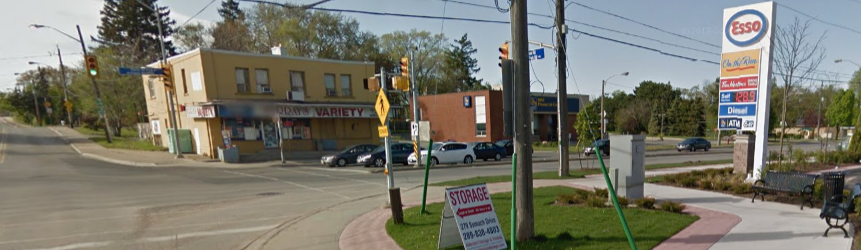 It is a busy intersection and Waterdown Road does have to be widened to handle future traffic projections. City documents said less than a third of the land was needed – they expropriated all the land without giving a public explanation. When he did delegate at city council he got caught by the clock that gave him just five minutes to make his points. Along with the decision from the Hearing of Necessity Officer that the city had not made its case for a full taking, Tang pointed out the city was relying on a section of the Municipal Act, that had been repealed some time ago. Some in the legal department had not done their homework.
The city argued that the remaining 900 square meters was too small to develop; Tang pointed out it was less than a km from the Aldershot GO station and part of a major traffic intersection. Tang said he could see a Starbucks going in there easily.
Tang added to what could only be seen as an impressive set of arguments, when he pointed out that if property acquired by the city for a purpose and then was not used for that purpose, the city was obligated to make it available to the original owner.
There were a few questions from Council – Councillor Sharman was brusque, close to being rude, when he asked Mr. Tang why he was not at the Standing committee meeting.
Council planned on going into a Closed Session to hear what the legal department had to say as to why they were apparently supporting the full taking. The public will never know what the city lawyers had to say – all that is off the record.
Council stayed in closed session for just over half an hour. When they came out they passed the motion to expropriate, which was not set out in the Council agenda; so no one was all that sure just what it was they were passing.
And that was it. Not a word from Councillor Craven whose ward the property was located in; not a word as to why the city chose to disregard the finding of the Hearing of Necessity Officer.
No one explained to the Lee’s why all of their property was being taken when the reports made it clear that all of the land was not needed.
Those words: transparency and accountability got lost at this council meeting.
The Mayor who likes to pride himself on his compassion for people wasn’t even able to look the Lee’s in they eye.
 The Lee family immigrated from Korea more than 30 years ago; worked hard, raised two children and prospered. They understood that the city had to expropriate part of the land – they just didn’t understand why it was all taken. They will be paid fair price – but based on documents put into evidence at the Hearing of Necessity – the property was not needed. An immigrant family, who matriarch was now the head of the household had to listen and try to understand why 30 years of hard work was being taken from them.
Yes, they would be paid a fair price – but that wasn’t the issue. The land was theirs; it wasn’t needed by the city, but they took it anyway.
They had the power to do so. Lord Acton, who visited Burlington not that long ago, was the son of the Peer who wrote: “Power corrupts and absolute power corrupts absolutely.”
Let Councillor Cravens friends in the Beachway heed this example. The same thing is going to happen to them. Small matter that the Beachway property belongs to the Region, these municipal bureaucrats are all cut from the same cloth.
 By Pepper Parr By Pepper Parr
July 28, 2014
BURLINGTON, ON.
Once City council had lopped close to $400,000 off the payroll with the retirement of Kim Phillips and Tom Eichenbaum, the significant seven did their usual non-debatable statements and then took a six week break – they will be back right after Labour Day.
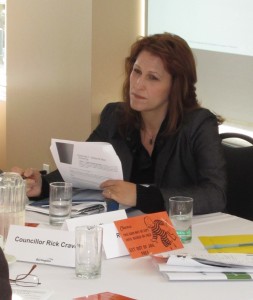 Ward 2 Councillor Meed Ward is looking at the financial side of the city much more these days. As chair of the Community and Corporate Services committee she shepherds the budget review through the Standing Committee and has brought a much more feisty approach to that process. Ward 2 Councillor Marianne Meed Ward said they were going to be away for a “short period of time” and the Mayor reminded Cogeco listeners that the members of council would be doing there door to door thing – given that this is an election year. The Mayor said you could expect to see him at your door as well – even though he is running against himself – and on that basis a number of people think he could lose.
 Director of Finance Joan Ford does a great job of providing the data and her department does a good job of collecting the taxes as well. It’s the spending side that is causing the long term financial stress. Ms Ford doesn’t do the spending. In approving the reports from the Standing Committee on Community Services there was mention of a report that was “received as information only” in which the Finance department set out what the tax hit for 2015 might be. There was no discussion about this at Council – but it’s something you might want to print out and stick under their noses when they come calling for your support.
In 2010 Council set the budget for 2011 and came up with a 0% increase, due in large measure to the first time citizens saw Councillor Sharman’s “bull in the china” shop approach to getting what he wanted. At the beginning of the term that is coming to an end, Mayor Goldring spoke of a 10% increase over the four year term. They came close. You won’t be so lucky in the next term – the projection is for a 4% increase each year for the four years.
Here is how Finance explained it all. Council was being given the parameters on which staff will prepare the 2015 budget. The framework presented in the report outlined principles that have been recognized by Council as important policy decisions, as well as highlighting budget drivers that will impact the 2015 budget.
By way of background, in November of 2012 Council approved a Long Term Financial Plan which outlined strategic objectives to ensure financial sustainability and responsible financial management; that is what Finance will be working from as they develop the 2015 budget.
On March 4, 2014, Council received the 20-Year Simulation of Forecasted Budget Drivers, which provided “a high level overview of major budget drivers and expected future tax rate impacts”. Inherent in the annual operating budget process are the normal pressures of inflation, growth, resources and fluctuating revenues, compounded by infrastructure renewal costs. This forecast as presented continues to recognize the anticipated drivers for the 2015 budget year resulting in;
2.1% increase to maintain existing services
0.6% to address corporate pressures
1.3% to address increased infrastructure funding
The above brings the forecasted increase to 4%.”
 The significant seven – how many of the rascals will get re-elected. The Mayor appears to be on the way to acclamation, but there are at least three council members who are at some risk risk. Finance was good enough to point out that this is an election year, and staff want to ensure that the framework includes the important policy decisions of this council while not pre-supposing any budget decisions for the incoming council. What they are saying is that this bunch of rascals had a plan but the next bunch of rascals don’t have to live with it.
The 2015 budget will ensure the following;
- Base budget tax rate changes are aligned closely with inflation, represented by the three year annual rolling average of the Consumer Price Index (Toronto). The 2011-2013 annual CPI average was 1.92%
- Ensure debt in the capital budget is used in a fiscally responsible manner, following the parameters in the city’s debt policy
- Provisions to reserves are made to ensure adequate cash flow to meet defined current and future needs
- Continued emphasis on moving forward with infrastructure renewal projects and maintain approved levies dedicated to reduce the infrastructure deficit, which is short something around $49 million
- Transition to service based budgeting and recognize value for services through the reporting of public services.
The following are highlights of the key budget drivers as identified in the 20-year simulation presented in March:
Maintain current service levels (That shouldn’t be seen as a given.)
Address areas for revenue increases/ shortfalls ICI revenue has been consistently short, a negative number in 2013 and probably another negative for 2014 when all the numbers are in.
Match growth-related cost impacts with growth revenue (assessment growth)
Manage labour costs within a workforce planning strategy
No additional Joseph Brant Hospital levy for 2015 and beyond
Dedicated infrastructure renewal levy of 1.25% as per the approved asset management funding plan
There are many initiatives currently underway that will impact the presentation of the 2015 budget. The City continues its transition to a service-based organization with a commitment to performance measurement, continuous improvement and accountability; but this is virgin territory for Burlington – expect some major hick-ups on this one.
The service portfolio currently has a total of 50 services (28 public services); this number may change as the service list is refined. Business plans summarizing the service strategy, existing service delivery, performance measures, and resources required to deliver the service at current service levels are in the review process. The 2015 current budget will be presented in both a service-based format and the traditional departmental-based format to ease the transition to a new budget presentation; that translates into close to two budgets which ramps up the staff time.
Staff continue to look for ways to improve the presentation for the capital budget and forecast. A corporate team is currently underway developing changes to the capital budget to bring the focus to infrastructure renewal projects and growth projects. The capital budget will remain a 10-year program, broken down by asset categories. However, projects that are outside the scope of infrastructure renewal or the Development Charge program (growth) will be identified separately for Council’s consideration during the budget review process.
 Sealing cracks on roads is one of the preventive maintenance tools before a road has to be rebuilt. Shave and pave has proven to be money well spent – and we are spending a lot of money on this tool. This Council has been proactive in addressing the city’s infrastructure gap, over this council term. Most recently, council approved the asset management financing plan, a balanced approach to address renewal needs over the next 20 years. Council has identified infrastructure renewal as a key priority, through the approval of dedicated infrastructure levies and continued emphasis on infrastructure projects in the capital budget.
Below is a brief timeline of the 2015 budget process. -one might add there is a magic wand in there as well. Somewhere in this time frame the city will be interviewing and hiring a new city manager who will undoubtedly want to put his finger prints on the budget documents.
Current and Capital budget overview – January 2015
Council Information Session – January 2015
Public Engagement – February 2015
Budget review – February 2015
Council budget approval – March 2015
Budget review and approval cannot occur until the New Year, after the new council has been inaugurated. Council also has to realize that municipal funding pressures in the provincial budget may impact Burlington. The province has a huge deficit it wants to reduce by 2017 – and that is not going to be easy. There is significant pressure on the province by the credit rating agencies (their ratings determine the interest rate the province has to pay) to reduce spending – some of those reductions might come out the hides of the municipal sector.
No one expects the near municipal rape of the Harris government, but those spending cuts have to come from somewhere.
Add to that the cost of the Official Plan and the costs it might create for the city. The transportation master plan (get transit in there as well) and whatever the new council decides it wants in its Strategic Plan; none of these are likely to reduce costs
Don’t forget the expanded winter control service to parking lay-bys and plowing links to primary sidewalks. Then there is the Ontario One Call service that requires all Ontario municipalities to join On1Call by June 19, 2014. Roads and Parks Maintenance annualized the cost to the city at $76,370 in 2015 plus a 25% contingency.
That comes perilously close to a $100,000 chunk out of the corporate apple and the city couldn’t register as much as a word in the way of complaint.
 Cathy Robertson has the unenviable task of knowing just when to get the snow plows out on the road and organizing her fleet so that the snow is plowed before people head for work. The Windrow in the drive way – sorry about that. The Burlington Economic Development Corporation managed to spend tens of thousands on report after report – now they will want funds to get into the game of actually doing some economic development. During the lead up to the creation of the reformed EDC all kinds of expensive ideas were flying around the room. This was an opportunity for the private sector to do what they like to do – take risks – with public money.
The Finance department adds that there might be upcoming reports from other sectors not yet brought to Council.
Mention was made of the opportunity to create a new strategic plan for 2015 and beyond, that can enable larger budget changes such as multi-year budgeting, which could shorten the review period and resource requirements, while maintaining the objectives of the Long Term Financial Plan.
That’s a little like the $60 million obligation the city took on to pay for the part of the Joseph Brant Hospital the city said we had to pay for – the requirement got laced into the budget and the taxpayers saw a new line on their tax bill. Don’t expect that cash grab to disappear once the $60 million has been collected.
Income tax was introduced to Canada as a First World War measure – that one is still with us. It is always wiser to have bureaucrats justify what they ask for every year – keeps them on their toes.
16% for the next four years eh! – and that’s the out of the gate number. Will Councillor Sharman manage to get himself re-elected and do his 0% increase for 2015 the way he did in 2011? He will want to be Mayor after that.
By Pepper Parr
July 28, 2014
BURLINGTON, ON.
They aren’t going to give up
There is something to be said about a city that has these small pockets of people who just don’t know how to give up. More than a year ago city council decided that despite the objections of more than a 300 people and against the staff recommendation they had in front of them, council decided they would sell a small stretch of waterfront land to an adjacent property owners.
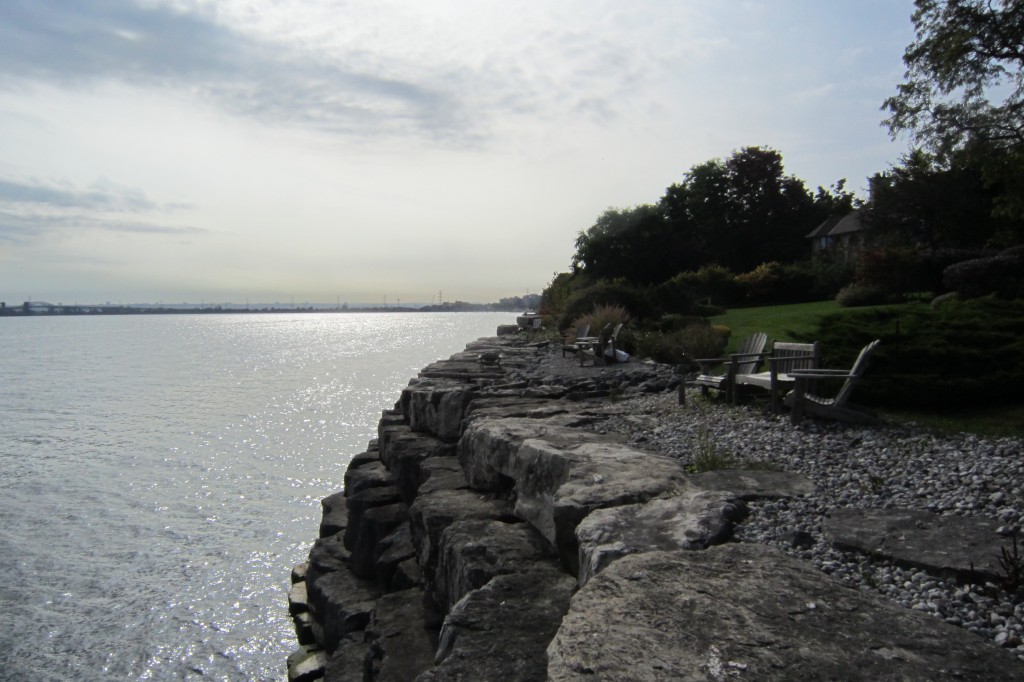 This is the view that will be lost to the public forever should the center property be sold. One wonders if the city would allow the property to be fenced off? Probably The first due date for the valuation of the property May 2014 but that had to be extended with no specific return date. The property in question is owned by both the city and the provincial Ministry of Natural Resources and they were apparently having both second thoughts as to whether or not the property should even be sold and the possible price as well.
 The view to the east from the foot of St.Paul Street. This would become one of the “windows on the lake” In their complaint the BWC argued that a “decision by Burlington City Council that is inconsistent with approved City policy and contrary to a staff report on the topic of the Water Street walkway/parkette.
 There are three parcels of land. The city currently owns the ones on the left and the right. The parcel in the centre is owned by the province and the city. The city said it would create “windows on the lake” with “minimal” amenities on the left and the right and sell the property in the centre to adjacent property owners. Deal hasn’t been done yet. Getting their complaint made turned out to be easier said than done. The Burlington Waterfront Committee first took their complaint to the provincial Ombudsman. Bureaucracies being what they are it took some time to get paper back and forth only to learn that people in Burlington do not get to take their complaints to the Ombudsman – they have to deal with Local Authority Services (LAS) which is a wholly owned subsidiary company of the Association of Municipalities of Ontario (AMO)
In order to get your complaint before LAS one needs to lay all their cards in front of the city clerk who then normally asks for a fee of $100. That fee was waived for the Burlington Waterfront Committee.
The complaint is now in the hands of an independent investigator.
The issue has to do with an unopened road allowance known as Water Street that lies between Market St. and St. Paul St. in downtown Burlington. At one point Water Street, which no longer exists, was the main road along the lake’s edge.
Back when the city had an official waterfront advisory committee they looked into upgrading, improving and adding to the collection of Windows on the Lake. These are very small parcels of land the city owns that are at the edge of the lake and serve as places where people can sit on a bench an just enjoy the view.
When the Waterfront Advisory Committee was brought to an end the “unofficial” Burlington Waterfront Committee was formed and they have got their teeth into ensuring that the old Water Street land just doesn’t disappear into the hands of private people.
The BWC argues that if the City concludes the sale of this property, the public will lose this waterfront asset forever. At the October 2013 Committee meeting which was held in closed session, the Councillors directed staff to negotiate the sale and report back in six months despite delegations from citizens and from the Burlington Waterfront Committee (BWC) and a staff report that recommended retaining and using the land for public use. In May 2014 City Councillors extended the negotiation period with no end date. The BWC attempted to present its case again that the sale was contrary to City Policy, however the BWC delegation was ruled out of order as the specific issue on the agenda was limited to the status of negotiations.
Citizens get suspect when dates for decisions get pushed back with no real date set. Files like that tend to get lost which is what got this whole matter before the public.
 A group of citizens proposed a pathway through the properties – it never got off the ground. But when the idea was put forward – it wasn’t an election year. Burlington was the lead city in what is now known as the Lake Ontario Waterfront Trail that starts at Lake Erie and runs along the edge of Lake Ontario all the way to the Quebec border.
While the piece of land between Market and St. Paul streets is very small – it is an important part of the trail that former Toronto Mayor David Crombie created.
Like the famed Bruce Trail – these things start out as an idea and they grow. It takes council members with vision and a true understanding of what their city is about to ensure that its heritage is maintained and grown. Vision has always been a problem for this council.
Background links:
It started with the old Waterfront Advisory Committee
Waterfront Advisory died and so did the idea for more Windows on the Lake.
Private interests made their move to buy the land.
Selling the family jewels Part 1
Selling the family jewels Part 2
How the city decided to sell it.
It wasn’t a popular decision
By Pepper Parr
July 27, 2014
BURLINGTON, ON
There are many views on the reformed Economic Development Corporation that has just held its first Board meeting. That occasion may have been the first time these men and women have met each other.
It takes time for a board to gel but Burlington doesn’t appear to want to give them even a little breathing room. At a city council workshop on commercial strategies and how zoning could be used to entice development to the city, much was made of the role the EDC was going to play in all this.
 Frank McKeown, then the Mayors Chief of Staff explains a concept to Ward 5 Councillor Paul Sharman, when the city was developing its Strategic Plan. Sharman is now in a race for his council seat, while McKeown serves as Executive Director of the reformed Economic Development Corporation of which Sharman is a city representative. EDC Executive Director Frank McKeown was in the audience and he wasn’t taking any notes. Much of the comment on what the EDC could do was coming from ward 5 Councillor Paul Sharman who also sits as one of the city representatives on the EDC Board. When that Board met a week after the city workshop there would surely have been much comment on where the direction for the EDC was to come from.
It is an arm’s length organization, funded by the city and responsible for carrying out the mandate the city gives it. What hasn’t been spelled it in really simple language is just what that mandate is.
There are some who know what it is, but they’ve not said very much about how they intend to deliver on the mandate.
To be fair, the EDC board will need some time to get its act together. The members of the Board do get paid for the work they do – there was some grumbling about that. Should they be paid? The private sector members are entitled to payment – those who hold elected office or represent a city agency should not be paid; that is called double dipping.
 One source, who has a considerable amount of experience with both the Planning Act and Community Improvements Programs, spoke on the condition that he not be identified, said that in “Burlington CIP’s are idea driven, not market driven . A CIP should not be presented without risk consideration – look around – the biggest empty office tower and shopping centre in downtown Hamilton was a community renewal plan; and so too, the downtown disaster mall in Brantford. At least for these projects we had three levels of government carefully reviewing the plans, full public participation is required, and the funding risks shared among three levels of government – the feds paying 50 cents on the dollar. All the marketing research firms said these projects would not fail – same guys who built the Titanic I guess.” One source, who has a considerable amount of experience with both the Planning Act and Community Improvements Programs, spoke on the condition that he not be identified, said that in “Burlington CIP’s are idea driven, not market driven . A CIP should not be presented without risk consideration – look around – the biggest empty office tower and shopping centre in downtown Hamilton was a community renewal plan; and so too, the downtown disaster mall in Brantford. At least for these projects we had three levels of government carefully reviewing the plans, full public participation is required, and the funding risks shared among three levels of government – the feds paying 50 cents on the dollar. All the marketing research firms said these projects would not fail – same guys who built the Titanic I guess.”
 Mayor Rick Goldring: He has a pro-active mode and when he’s confident he puts it to good use. . “So now, a new Burlington BEDC that has no cash flow, no experience, paying its Board, and modeled after the non-competitive Hydro utility which should be sold ASAP – go figure? Is it a panacea or political placebo?
“I have a lot of respect for both the Executive Director and the people in the planning department, but let’s not go in with rose colored glasses.”
Indeed let us go into this with our eyes wide open and with as much information as possible. McKeown has said the EDC he runs will be transparent; the hope is that he will be forthcoming with information on a timely basis.
 Councillor Jack Dennison, running again in ward 4 serves as a city representative on the Economic Development Corporation. Dennison has yet to see a deal he did not like. McKeown works with an 11 person board with just one member kept over from the previous board that has Gary Graham, Chairman Gowling Lafleur Henderson LLP; Rick Goldring City of Burlington; Paul Sharman City of Burlington; Jack Dennison, City of Burlington; Ruta Stauskas, Boehringer Ingelhein (Canada) Ltd.; Bonnie Prior; Appraisal Institute of Canada; Randall Smallbone Portland Investment Counsel; Michael Hanna Kylin Developments Inc.; Gordon Knack, MHPM Project Managers Inc.; Dr. David Conrath, Conrath Communications Ltd.;– President; Patrick Moyle City of Burlington.
We don’t know much about these people other than they applied to be members of the board. Dr. Conrath appears to have a very interesting resume while Kylin Developments has a web site that says they will do almost anything you want and they will do it well.
By Ray Rivers
July 27, 2014
BURLINGTON, ON.
It sounds perverse perhaps, but this war against Russia may be the best thing for Ukraine. It has already succeeded in uniting a broken and divided nation. The western part wants to be part of the European Union (EU) community of nations and the eastern part, at least before the current occupation by terrorists, had wished they could back to the glorious old Soviet days. But as the conflict continues east and west are finding one common cause – a growing disdain for Russia.
Ukraine naively gave up its nuclear arsenal, the third largest in the world, to Russia in exchange for a treaty guaranteeing its security. Ukrainians must regret that decision now since Russia has broken its treaty commitment and invaded while the other signatories to the Budapest Memorandum washed their hands, as if their signatures meant nothing.
 There was a time when we saw Russian leader Putin as an ally – he is now being painted as a sinister and perhaps dangerous leader. Ukraine has long sampled all that Russia has to offer its satellites. Even after independence the country floated in the Russian orbit, putting off both EU and NATO memberships to avoid upsetting Mother Russia. But the example of a blossoming Poland, whose economy had rocketed following its EU membership, was just too hard to ignore for Ukrainians watching their economy decline in relative terms, and becoming one of the most corrupt places on the planet – even worse than Russia.
For all the respect world leaders accord the Russian Federation, its economy is smaller than Italy’s. Yet it punches above its weight on the global scene, given its historical place on the UN Security Council; its vast array of nuclear warheads, second only to the USA; and its huge land mass and natural resources therein. And, of course, it has sucked the EU into dependency on its natural gas, now so vital for their economies.
But Russia’s days as a fledgling democracy are over. Putin has jailed his political opponents. He has converted a once independent media into a smooth propaganda machine that turns out the facts the way he wants them to appear. No mistake about it, Putin has made the grade from elected President to virtual dictator. And true to form the downing of Malaysian jet liner by Russian insurgents in eastern Ukraine, using a Russian surface to air missile, likely co-ordinated by the Russian military is someone else’s fault.
So the alternate reality recently emanating from Russian media included a number of alternate theories, such as that dead bodies had been placed in the plane, a kind of ‘zombie’ vessel, and set to explode over rebel occupied territory to embarrass them, or that the Ukrainian air force had actually shot down the plane thinking it was Putin returning from Brazil.
Of course the west is partly to blame for this conflict – at least by how is has responded. NATO is in shambles, having been neglected for decades while member countries reducing their defense budgets every year. The pleas for more NATO support in the Baltic and south eastern member states have fallen on deaf ears as leaders reflect on what NATO was actually trying to accomplish in Afghanistan.
And Ukraine’s future EU partners are sleep walking, reticent to make Putin pay for his aggression and the disruption of a world order form which the Russian economy benefited so well – exports of natural gas for imported weapons to modernize Russia’s military.
 Is the future of the western world in the hands of these two men? It is not the west’s fault that the Ukrainian army was run into the ground over the last couple decades, nor that it has taken the nation this long to realize that a brighter future lies sleeping with the rest of Europe and not Russia. And it isn’t the west’s fault that Ukraine is on the cusp of bankruptcy as a result of corruption and its treasury having been plundered by the former president. But it is our fault that we have not reacted more quickly and more substantially. Doing so might have caught this current conflict in the bud.
The world order has changed again, though it seems only a few years ago that Russia was a partner rather than an enemy. Whether it is Putin’s unobtainable strategy, his ego or his disdain for the west, he has changed the way we will look at east-west relations for a long time. And even if Putin pulled back his mercenaries in Ukraine and stopped shelling their common border, he’d still have to explain the Malaysian air tragedy for which he bears ultimate responsibility. And after this is over Ukraine will have found its inner self and Russia, hopefully, found a new leader.
Corruption Airliner Shot Down Airliner Blame Game Putin The Nuclear Issue Russia Gone Rogue Propaganda Ukraine Conflict
Russian alternate Reality Canadian Support
Ray Rivers writes weekly on both federal and provincial politics, applying his more than 25 years as a federal bureaucrat to his thinking. Rivers was a candidate for provincial office in Burlington where he ran against Cam Jackson in 1995, the year Mike Harris and the Common Sense Revolution swept the province. He developed the current policy process for the Ontario Liberal Party.
By Staff
July 27, 2014
BURLINGTON, ON.
With no ward debates planned, except for ward 4 where a debate is scheduled for October 1 with Maureen Tilson-Dyment moderating a panel of three journalists, who will have questions for the candidates. Get a ticket to this one.
Without debates in each ward, all the best candidates can do is knock on doors and hope that people spread the word.
What we might be seeing is a media release campaign where candidates send out their statements and positions on issues and hope that media pick up what they produce.
The Gazette will be publishing almost everything it gets.
Some candidates, notably Jennifer Hlusko running in ward 6, are making exceptional use of social media. Hlusko gets something out on her blog almost daily and covers a wide range of issues.
 The Skyway Plaza is seen as a location with an absentee landlord who does not want to talk to anyone about improving the property. The city has wanted to see something done with this location and the sitting council member appears to have made it an election issue in his ward. Direct the Director of Planning and Building and request the Executive Director of the Burlington Economic Development Corporation as follows:
Prepare a series of re-development options for the site based on intensive mixed use re-development and approach the owners of the property with the redevelopment plans; and
Investigate and report on the authority available to permit the use of incentives for re-developing the site, and
Provide an estimate of the resources needed to prepare and implement a Community Improvement Plan.
And it didn’t take the planner very long to pull together a committee and start figuring out what they could take back to Council in September. They had a committee set up within a week.
The Economic Development Corporation had yet to hold its first board meeting when the Staff Direction was approved. It would be interesting to hear what the Board thought of the Sharman idea.
Not quite so fast was Smith’s response. There is a public that has to be involved. “In preparing to run for city council” Smith said, “I have studied Community Planning in other cities, notably in Toronto. I can tell council that Burlington needs to do a couple of things to establish any Community Improvement Planning (CIP) process; we need to have a CIP specifically sanctioned in our Official Plan – and that is already in place. However; according to the Ministry of Municipal Affairs and Housing: “The Planning Act requires that public meetings be held before a community improvement plan can be considered by council”.
Smith has been campaigning since April on a 3 for 5 platform; three policy ideas for Burlington’s Ward 5. Basically he is focusing on how the city plans, how people get around the city and how we pay for the city we want.
 There is a single ice pad arena at the rear of the plaza that the city felt could be part of a land assembly to do something significant. Smith however has several major concerns including the failure to follow proper council procedure. The staff direction “was not presented to the public for discussion – unless you count my proposal on my website (3for5.ca) nor was the idea presented to a committee as is the accepted and normal practice.”
Smith adds that: “This proposal for a staff direction to study a CIP was also not circulated to council prior to their last meeting of the summer. Rather it came as a surprise agenda item. This oversight makes me question the skill, ability and experience of a sitting city Councillor at the end, rather the beginning of his term and makes me further question his motives.”
Smith points out that the East End of Burlington is a gateway to the City for the vast majority of residents, businesses, and visitors. Lakeside plaza is only one of many under-utilized resources in the East End. The present Councillor may not agree, but the East End should be playing a major role in the development of the city.”
Smith wants whatever is done “to be a legitimate process”, and adds that we “need to remember Burlington has an engagement charter that is supposed to be city policy, Community Planning is too important to the future of our city and to Ward 5 to have it be predetermined by yet another secret back room deal, we’ve had enough of those in the past few years.”
 A very large park space is adjacent to the recreation centre which is at the rear of the plaza – which many feel has the makings of a significant opportunity to develop the east end of the city.
 Frank McKeown, then the Mayors Chief of Staff explains a concept to Ward 5 Councillor Paul Sharman. McKeown went on to become the Executive Director of the reformed Economic Development Corporation which Sharman wants to do something to revive the east end of the city. Smith added: “Far too often with the present Ward 5 Councillor, public meetings and engagement mean window dressing; in other words, tell citizens what the city has decided after decisions have already been made. We can’t let this continue to happen! We need to go beyond the present Ward 5 councilor’s timid and sneaky proposal, a proposal that illustrates his record as a city Councillor, a record that can be summed up best as Ready, Fire, Aim!”
The gloves are off in ward 5.
Background links:
How that staff direction got passed.
By Pepper Parr
July 21, 2014
BURLINGTON, ON
He will begin his second year of life on Tuesday. HRH Prince George Alexander Louis of Cambridge, the fourth in line to the Throne and the person, who will at some point become the Monarch of Canada, is also the recipient of a handsomely bound Book of Best Wishes from the people of Burlington.
The idea for the Book of Best Wishes came from the community and was made real by a small committee of four people: Joe Veitch, Susan Fraser, Selina McCall and publisher of the Burlington Gazette Pepper Parr.
Once the fundamentals were in place the group met with the Mayor to get a buy in at that level. While the initiative came from the community, it was important for the city to be onside. The Mayor loved the idea – “cool” he said, and then suggested that the signing period be extended a few days to include Canada Day.
 No fancy “apps” in the classic binding business. Our binder is in the business of restoring ancient volumes and making presentation copies of original work. We are looking forward to their doing our binding for 50 years and then some. Joe Veitch recruited the volunteers needed to be at the tables, where people could sign the sheets and write their greeting.
 This banner, which stood 7 feet high was set out wherever the public was invited to sign the Book of Best Wishes. The challenge now is for the “trust” running this project, to determine what the picture will be for next year. Joan Krygsman and Selina McCaul, designed the banner. First time out on this project, we learned a lot of lessons – almost everything ended up costing more than we had planned.
Many wondered why they couldn’t see the finished product, when they were signing. We had people at a number of places on the same day – and we didn’t know how many signatures we were going to manage to collect – and thus didn’t know how thick the book was going to be.
Special metal plates had to be made for the gold embossing that was to be stamped into the leather. We would set the type, send it to the book binder, who would have the metal plate made. We had to do some guessing as to how many signatures might be collected – that would determine the thickness of the book and also the size of the plate that had to be made.
The book couldn’t be shown to anyone until it was bound and it couldn’t be bound until all the pages with signatures had been collected..
To get around this problem we endured the expense of having a demonstration copy made – a book bound the way the actual version was to be bound, but with blank pages inside.
One doesn’t just send a book to a Prince. Anything of any significance that gets sent to members of the Royal family, goes through the offices of the Governor General at Rideau Hall in Ottawa. Rideau Hall, home of the Governor General has staff that communicates with the various members of the Royal family – well not the Dukes or Princes or the Duchesses personally – but with their staff. All this communication is bound by more protocol than you can imagine.
Because the Book of Best Wishes was a new idea, it took a bit of talking to convince Rideau Hall to go along with us; it wasn’t until they saw a picture of a sample binding that they understood just what we had in mind.
 Citizens signing the Book of Best Wishes at the Burlington Library on New Street. The Mayor convinced us to set up in Spencer Smith Park on Canada Day – that worked out very well.
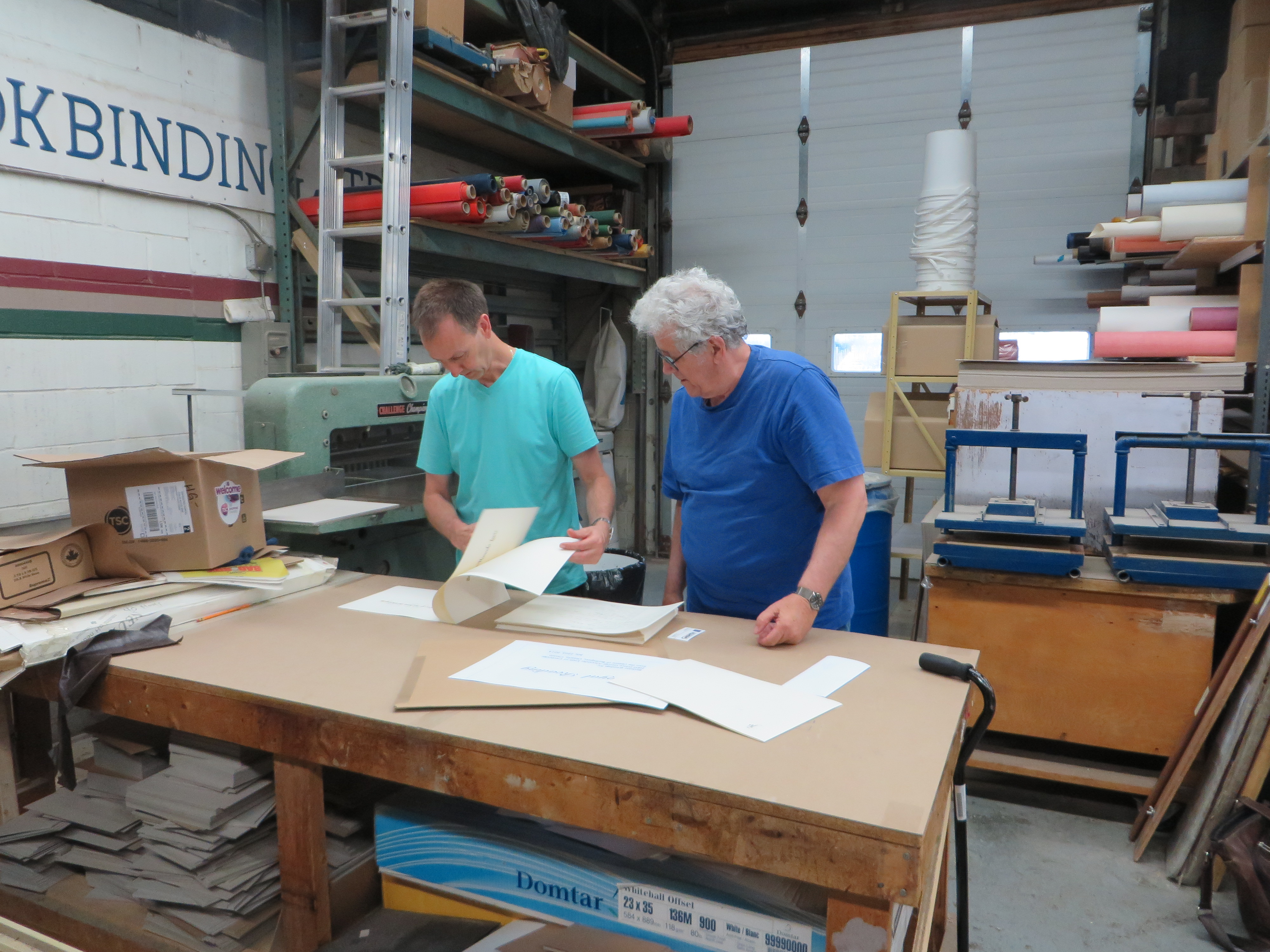 Burlington Gazette publisher Pepper Parr works with binder Keith Felton on the way pages will be gathered together for binding into the first Book of Best Wishes being sent to HRH Prince George Alexander Louis to celebrate his first birthday. The volume was ready in a few days and shipped to Ottawa where it had to be x-rayed before it could be accepted and then sent off to Kensington Palace where the Prince will celebrate his very first birthday.
We have no idea if the Prince will actually see the book – who knows how Royal Families work, but we believe that the parents will see and handle the book – and perhaps wonder just where Burlington is anyway.
The project has been organized as a “trust” so that its members can replicate themselves and ensure that a Book of Best Wishes is sent to the Prince every birthday of his life.
There is more to the project – stay tuned.
 By Pepper Parr By Pepper Parr
July 21, 2014
BURLINGTON, ON.
The Skyway Plaza, an east end commercial location that is as close to a suburban slum as Burlington is going to see, has suddenly become headline news – especially in ward 5, where Councillor Paul Sharman senses he might be facing a tough opponent in the October municipal election.
Forlorn looking Skyway Plaza – looking for someone to save the place – but the owners seems content to leave it as it is. Has the Council member made the site an election issue? There is a basement bowling alley that hasn’t been used in years. There was once a Swiss Chalet; the Shoppers Drug Mart has a very faded sign and you’ll not have a problem getting a parking spot. To the rear of the plaza, there is a single pad arena that could use an upgrade.
Councillor Sharman has been doing everything he can for the past three years to get something going, but has gotten absolutely no traction with the absentee owner of the property. At one Standing Committee meeting, then city manager, Jeff Fielding suggested that the city could pool the property it has to the rear of the plaza and come up with a major development opportunity. What would it take to get to that point, asked Sharman? A staff direction would get us started, replied Fielding. But that wasn’t enough.
Sharman has made phone calls – dropped into offices in Toronto – nothing.
When Council went into a Workshop setting a week or so ago to look at ideas and opportunities to put some oomph into the commercial side of the city’s finances – Sharman was all over the idea of doing something with the best opportunity he has of raising his profile during an election year.
During that Workshop July 7th, mention was made of Community Improvement Programs (CIP). There wasn’t much more than a mention of CIP’s during the Workshop, but that mention was enough to get Sharman moving.
At the city council meeting of the 14th, Councillor Sharman put forward what Councillor Taylor called a Walk On motion, that few saw before it was actually presented. Sharman didn’t inform his colleagues – other than the mayor – but he did manage to get a majority of council to allow the motion.
Sharman explained in a telephone conversation. that getting the memo on the motion he had planned to put forward was left in the hands of the Clerk. Apparently planner Bruce Kruchelnicki was drafting at least a part of the document and was to send it along to the Clerk – who apparently failed to get it out to the other members of Council.
That comes pretty close to saying the dog ate my homework excuse – limp and lame if you ask me.
Much of the debate on the Sharman motion was at times contentious, if not nasty, but they managed to agree on a Staff Direction that went as follows:
DIRECTION REGARDING LAKESIDE PLAZA
Direct the Director of Planning and Building and request the Executive Director of the Burlington Economic Development Corporation as follows:
- Prepare a series of re-development options for the site based on intensive mixed use re-development and approach the owners of the property with the redevelopment plans; and
- Investigate and report on the authority available to permit the use of incentives for re-developing the site, and
- Provide an estimate of the resources needed to prepare and implement a Community Improvement Plan. (SD-23-14)
A Recorded Vote was requested by Councillor Dennison on the above recommendation, resulting in the following:
IN FAVOUR: Councilors Craven, Dennison, Sharman, Lancaster and Mayor Goldring
No one in Halton has done a CIP in more than 20 years; no one seemed to know all that much about the things – until Councillor Meed Ward informed Council that the downtown development group knew all about the things and that all they had to do was ask Special Business Area Coordinator Jody Wellings, who has been looking for ways to make a CIP work for the downtown core and Aldershot, but no one has actually asked Ms Wellings to do anything – yet.
Back in the 70’s and 80’s the provincial government made some money available for CIP type projects – but that tap got turned off and it isn’t likely to get turned on again.
However Wellings knows her stuff and she will get more than a chance to set out some of the potential at a meeting planned for tomorrow. Unusual for a team to get put together quite that fast. Is the force behind all this the Sharman Staff Direction or is it the EDC exercising some of the muscle it is supposed to have?
What was evident during the debate was the total lack of process – matters like this get brought to a Standing Committee, where input from staff enhances the debate. But that wasn’t the route Councillor Sharman wanted to take – he has an election he wants to win, and he needs an issue that puts more space between him and what looks like a strong contender.
The city owned area, with a very large play field area is right behind the plaza – this is what the city hopes to attract developers to – possible? With discussion about spending money for community improvement elsewhere in Burlington on the table, Ward 1 Councillor Rick Craven mentioned that Aldershot likes the look of those Community Improvement Projects as well.
The reformed Economic Development Corporation (EDC) looks as if it is going to become the financial saviour of the city. During the workshop on the 7th – several references were made on how the EDC could work with the city and the role it would play in getting the Skyway Plaza situation fixed. Executive Director Frank McKeown was in the audience, but he wasn’t taking notes.
The EDC board met for the first time on the 15th – the day after Council approved the Staff Direction requesting that it jump into bed with the city on this one. Sharman is a city representative on the EDC board.
The elephant in the room is the massive shopping centre planned for the other side of the Burlington/ Oakville border – blocks away from Skyway. Why all the fuss and bother over a Council Workshop and a Staff Direction? Burlington now knows that it cannot expect to pull in the kind of revenue it used to on development charges – it now has to expand the tax base on the Industrial, Commercial and Institutional (ICI) sector and it has reformed the EDC to make that happen.
The end run that Sharman did at Council before it rose for the summer looked like corporate shenanigans – not a good sign.
The expropriation done at Plains Road left at lot to be desired in terms of the way a property owner was treated. More on that on another day.
|
|